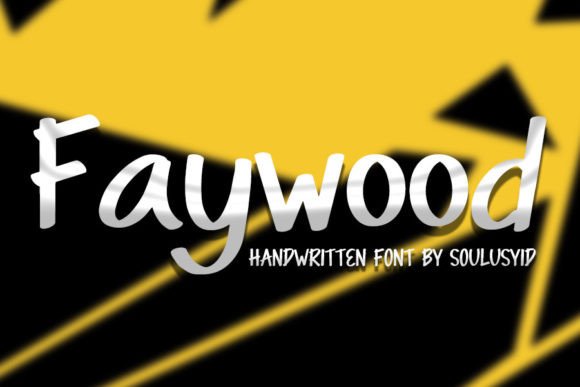
Faywood: A Friendly Handwritten Font
Working on a boutique online store project, I was looking for a font that could bring warmth and personality to the site’s design. After testing several options, Faywood stood out. Its soft, handwritten style felt just right for a brand that wanted to feel approachable and authentic.
Faywood is a sweet and friendly script font with a natural, slightly irregular flow. It doesn’t look overly stylized or forced—it feels like it was written by hand, which gives it a unique charm. This makes it ideal for digital layouts where a personal touch can make a big difference.
Using Faywood in Web Design
I started by placing Faywood in the hero section of the website. The headline looked great against a background image of the store’s products. It added a sense of creativity without overwhelming the design. The font’s curves and subtle variations made it feel more human than a rigid, machine-made typeface.
Next, I tested it on mobile screens. On smaller devices, the font remained readable, though I noticed that using it for longer paragraphs wasn’t the best choice. Faywood works best as a display font—perfect for headings, buttons, and short phrases rather than body text.
For the product landing page, I used Faywood in the call-to-action button. The font’s friendly nature helped reinforce the brand’s message of trust and ease. It paired well with a clean sans serif for the product descriptions, creating a balanced visual hierarchy.
When to Use Faywood
Faywood excels in areas where a personal, creative vibe is needed. It’s great for headers, logos, and decorative accents. I found it particularly effective in a coaching website’s homepage, where it helped set a welcoming tone.
In a portfolio site, I used Faywood for the project titles. It gave each section a distinct identity while keeping the overall design cohesive. For a blog redesign, I placed it in the header and featured images, adding a touch of elegance without being distracting.
The font also worked well in a promotional landing page. Using it for the main headline and subheadings created a clear focal point, drawing attention to key messages without cluttering the layout.
Readability and Layout Considerations
On dark backgrounds, Faywood maintained good contrast, but I avoided using it on very busy images. When overlaying text on photos, I kept the font size large enough to ensure legibility. On light backgrounds, the font looked crisp and clean.
For small buttons, I reduced the font size slightly but kept the weight consistent. This allowed the font to remain visible without losing its character. In responsive layouts, I made sure the font scaled properly across different screen sizes.
One thing to keep in mind is that Faywood may not be the best choice for multilingual content. While it supports many languages, the handwritten style might not translate as smoothly in non-Latin scripts. Always check the font’s language support before using it in international projects.
Pairing Faywood with Other Fonts
When pairing Faywood with other fonts, I leaned toward simple, modern sans serifs for body copy. This created a nice contrast between the decorative script and the clean, readable text. For editorial designs, I paired it with a serif font to add a classic, refined feel.
In a course sales page, I used Faywood for the title and a bold sans serif for the features. This helped guide the user’s eye through the content while maintaining a professional appearance. For a digital brand kit, I used it in logo design and social media graphics, ensuring consistency across all assets.
Font Details and Licensing
Before implementing Faywood on any project, I checked the available styles and weights. The font comes in multiple variations, making it versatile for different design needs. It’s available as a webfont, which is essential for fast-loading websites.
The file formats included were suitable for both desktop and web use. I also verified the commercial licensing terms to ensure it could be used on client projects and online stores without issues. For a small business website, this was an important consideration.
Overall, Faywood is a valuable addition to any designer’s toolkit. Its friendly, handmade aesthetic brings a unique energy to digital projects, making it perfect for brands that want to stand out while maintaining a professional edge.
Whether you’re working on a creative portfolio, an online store, or a coaching website, Faywood offers a fresh and approachable way to express your brand’s personality. With careful use and thoughtful pairing, it can elevate your design work and help create a more engaging online experience.